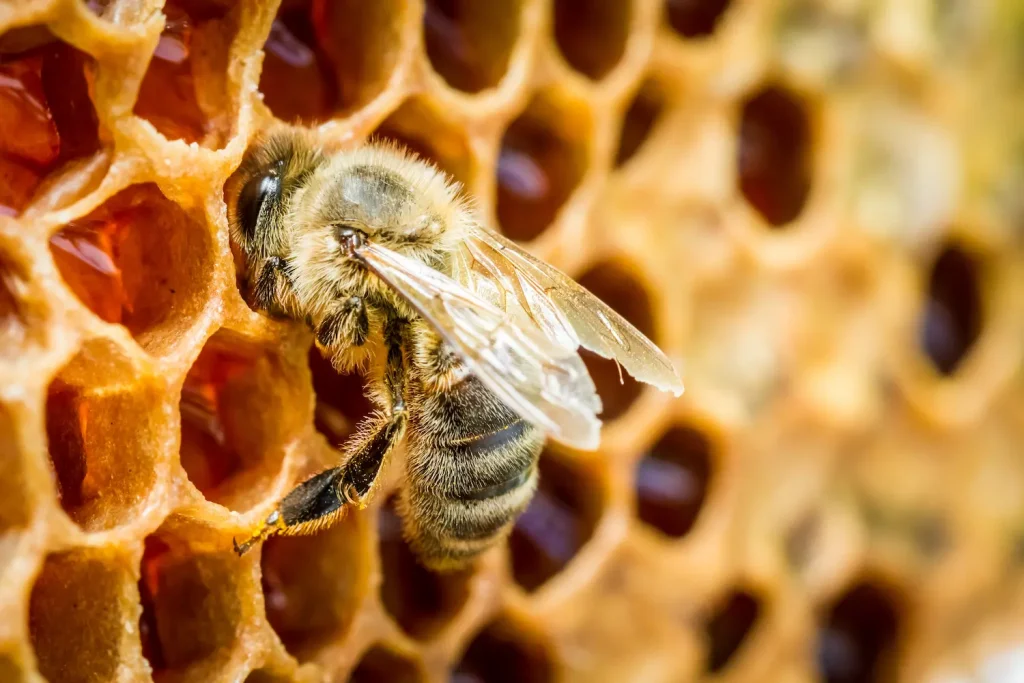
A beehive on your property is one of those situations where what you do in the first few minutes matters. The wrong move, getting too close, trying to spray them, or blocking their entrance, can turn a manageable problem into a dangerous one.
Whether you’ve spotted bees streaming in and out of your wall or found a cluster hanging from a tree branch, there’s a clear path forward. Below, we’ll walk through how to stay safe, identify what you’re dealing with, and get the hive removed properly so it doesn’t come back.
Before deciding on next steps, it helps to understand whether you’re looking at a temporary swarm or an established hive. The difference matters because it affects how urgent the situation is and what kind of removal you’ll need.
A swarm is a group of bees that has left an overcrowded colony to start a new one. You’ll often see them clustered together on a tree branch, fence post, or even a car bumper. Swarms are typically docile because they have no hive, no honey, and no brood to defend. They’re just resting while scout bees search for a permanent home. Most swarms move on within 24 to 72 hours if left alone.
An established hive is a different story. When bees have moved into a wall cavity, attic, eave, or tree hollow and started building honeycomb, they’re not going anywhere on their own. You’ll notice consistent bee traffic in and out of a single entry point, often at the same times each day. Once a colony has invested in a location, professional removal becomes necessary.
It’s tempting to handle the problem yourself, especially if you’ve found a small cluster of bees or think you can just spray them and be done with it. However, DIY beehive removal rarely works out the way homeowners expect.
Without proper protective gear, you’re putting yourself at risk for multiple stings. For most people, this means pain and swelling. For anyone with a bee allergy, even a single sting can become a medical emergency. And if you happen to disturb an Africanized colony, the response can be overwhelming.
Beyond the safety concerns, there’s the issue of incomplete removal. Killing the bees without removing the honeycomb leaves behind wax, honey, and pheromones inside your wall or structure. That leftover material attracts new colonies within weeks. It also draws ants, roaches, and rodents looking for an easy meal. You could end up with a worse problem than you started with.
| DIY Removal | Professional Removal |
| Risk of multiple stings without proper gear | Technicians use protective equipment and proven techniques |
| Incomplete removal leaves honeycomb behind | Full extraction of bees, comb, and honey |
| Trapped bees may find new exits inside your home | Entry points sealed after removal |
| Pheromones attract new colonies | Scent neutralization prevents return |
One of the most common mistakes homeowners make is plugging the hole where bees are entering. The logic seems sound: block their way in, and they’ll go somewhere else. Unfortunately, the opposite happens.
Bees trapped inside a wall or structure will look for another way out. They’ll chew through drywall, insulation, or other materials to escape. That new exit is often inside your home rather than outside. What started as bees in your wall can quickly become bees in your living room or bedroom.
Leave the entrance alone until a professional can properly extract the colony. After removal, the entry point can be sealed to prevent future infestations.
The safest and most effective way to handle a beehive on your property is to call a licensed bee removal specialist. A professional will locate the hive, safely extract the bees, remove all honeycomb and debris, and seal entry points so bees can’t return to the same spot.
When looking for a removal service, a few things are worth considering:
Swarm removal is often relatively affordable, and some beekeepers will relocate swarms for free or a small fee. Established hive removal from inside structures costs more because it involves accessing wall cavities, removing honeycomb, and repairing the area afterward.
If you’ve found bees on your property and want them handled quickly and safely, give us a call. Our team serves Temecula Valley and the surrounding areas with same-day live bee removal.
Removing the bees is only part of the job. What’s left behind can cause just as many problems if not addressed properly.
Honeycomb inside a wall cavity contains honey, wax, and pheromones. The honey attracts pests like ants and cockroaches. In warm weather, wax can melt and seep through drywall, leaving stains on your walls and ceilings. And the pheromones act like a beacon for scout bees searching for a new home. They can smell an old hive location from a surprising distance.
A thorough removal includes extracting every bit of comb, cleaning the cavity, and treating the area to neutralize lingering scents. This is the difference between solving the problem once and dealing with it again next season.
Once the hive is gone, the next step is making sure bees can’t return to the same spot or find a new one nearby. Bees can squeeze through openings as small as 1/8 of an inch, which means your home likely has more potential entry points than you’d expect.
Areas to inspect and seal include:
Oil-based sealants work well because they help mask the scent of the old hive. Water-based products don’t block pheromones as effectively, which can leave the location attractive to future scouts.
Certain scents discourage bees from investigating your property in the first place. While repellents won’t remove an existing hive, they can help prevent new colonies from settling in after removal.
Bees tend to avoid strong-smelling plants like peppermint, spearmint, eucalyptus, citronella, and garlic. Planting these around your home’s perimeter or near previous hive locations adds another layer of protection. Essential oil sprays made from these plants can also be applied to areas where bees have shown interest.
Keep in mind that repellents work best as part of a broader prevention strategy. They’re most effective when combined with proper sealing and regular property inspections.
In Southern California, bee activity can start as early as February and continue through late fall. Spring and early summer are peak swarming times when colonies reproduce and send out new swarms to establish hives elsewhere.
During these months, it’s worth taking a few minutes each week to walk your property and look for signs of bee activity. Pay attention to eaves, sheds, trees, valve boxes, and any structures with cavities or voids. Catching a swarm early, before it becomes an established hive, makes removal simpler and less expensive.
If you notice scout bees investigating a particular spot on your home, that’s a sign they’re considering it as a potential hive location. Acting quickly at this stage can prevent a full infestation.
Even after a successful removal, your property remains attractive to bees if entry points exist. Professional bee proofing involves a thorough inspection of your entire home to identify and seal every gap, crack, and hole that could allow bees inside.
This is detailed work that takes a trained eye. Many homeowners miss small openings that seem insignificant but are perfectly sized for a bee colony. A gap that looks like nothing to you looks like a front door to a scout bee.
At Bee Removal Pros, we’ve helped hundreds of homeowners throughout Temecula Valley and Southern California remove hives safely and keep bees from coming back. Our team offers same-day service, live bee relocation to local apiaries, and comprehensive bee-proofing to give you lasting peace of mind.
Q: What is the 3 3 3 rule for bees?
A: The 3 3 3 rule is a guideline beekeepers use when relocating hives: move the hive less than 3 feet or more than 3 miles, and wait 3 days before opening it. This prevents forager bees from returning to the old location and getting lost. For homeowners, this rule explains why professional relocation involves taking bees to a distant apiary rather than just moving them across your yard.
Q: How much does it cost to relocate a beehive?
A: Swarm removal often costs between $75 and $200, and some beekeepers offer this service for free. Established hive removal from structures typically ranges from $500 to $2,000, depending on the hive’s location, size, and how much repair work is needed afterward. Getting a professional assessment gives you an accurate estimate for your specific situation.
Q: Will bees leave on their own if I wait?
A: Swarms often move on within a few days, but established hives will not leave voluntarily. Once bees have built a honeycomb and the queen is laying eggs, they consider that location home. Waiting only allows the hive to grow larger, making eventual removal more difficult and more expensive.