
Bees in Walls, Roofs and Soffits
When the colony is inside the building, the bees you can see are the small part of the problem. What is behind the surface is the rest of it.
A colony behind a wall does not sit still. The sooner it comes out, the smaller the opening.
Honey bees are relocated whenever practical.
Taking just the bees is half a job. The wax, the honey and the brood come out of the cavity too.
Wall jobs across the valley go to the same local crew.
We get the bees out and make the wall right.
The colony comes out, the cavity is cleared, and the way back in is closed.
Are the bees inside the structure?
Watch the wall for a minute. Steady traffic in and out of one hole means the bees are living inside it.
Bees are going in and out of one spot in a wall, soffit, vent or chimney.
Bees using the same gap over and over have set up inside. A swarm passing through has no hole to use.
You can hear activity behind a wall or ceiling.
If you can hear them, the colony is right behind the surface. That narrows down where we open.
There is a stain, a soft spot or dripping on a wall or ceiling.
That is honey soaking through, and it means the comb has been in there a while.
If they are not inside, it is one of these
If nothing is going in and out of the structure, the bees are somewhere you can see them.
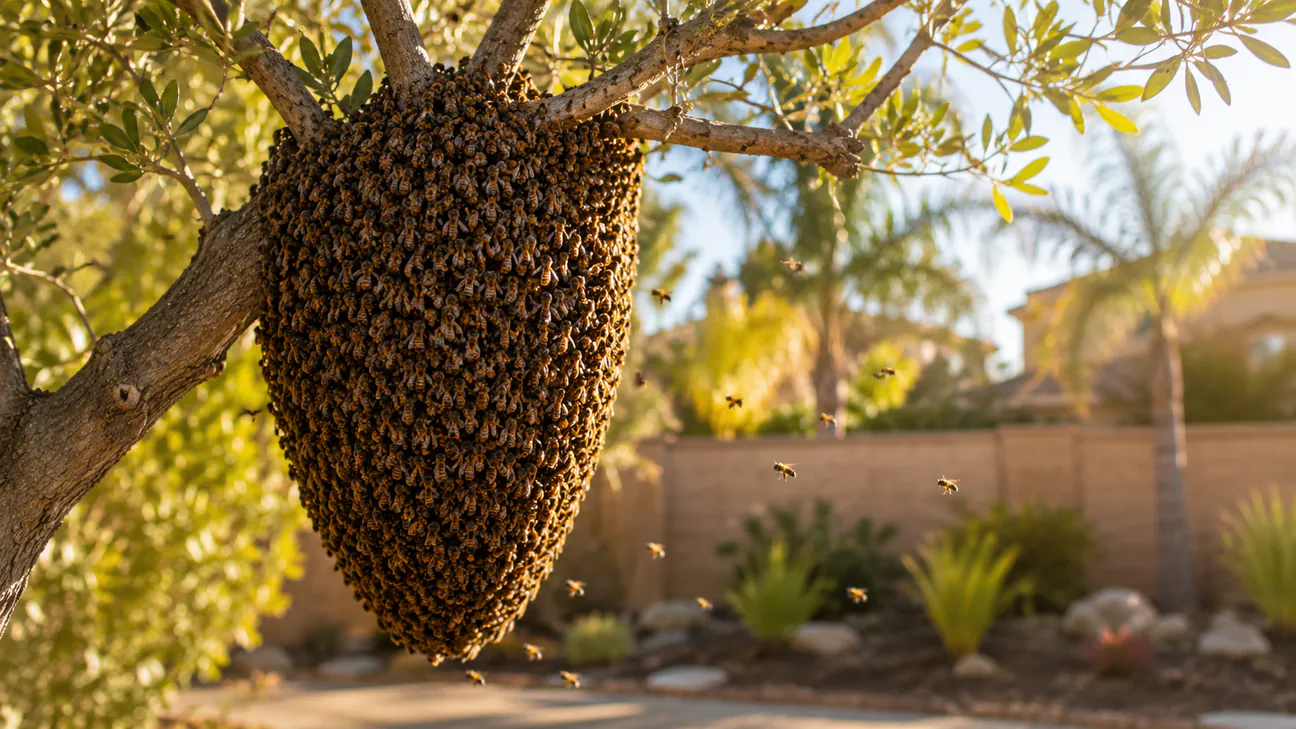
Swarm Removal
Bees hanging in the open with no hole to go into have not moved in yet. Caught at that stage, a swarm is a simple collection.
About swarm removal ->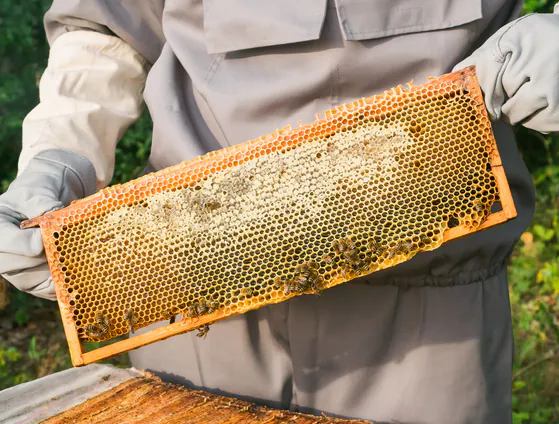
Beehive Removal
Wax comb out where you can see all of it is an established hive. The hive and all its comb come out together.
About beehive removal ->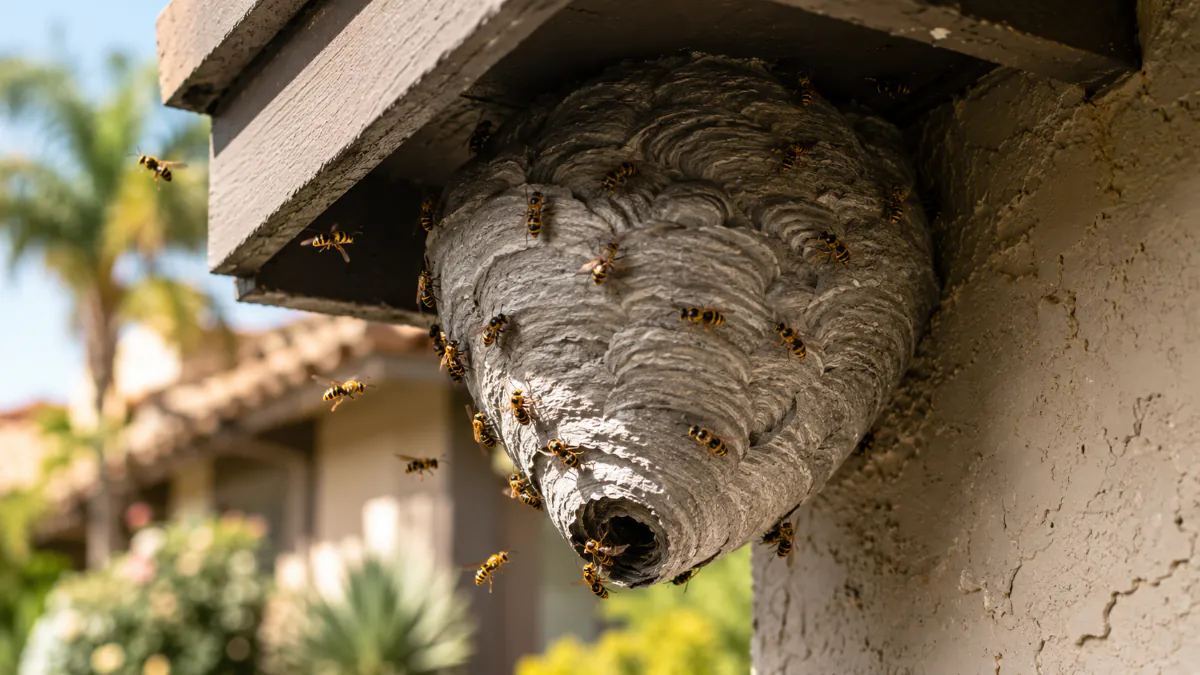
Wasp and Yellow Jacket Removal
A papery grey nest under an eave is wasps, not honey bees. Those come down for safety, and nothing gets relocated.
About wasp removal ->From first call to bee-free, in four simple steps.
Getting bees out of a wall starts with finding where the colony actually is, and the steps run in this order.
Send a photo or call
Tell us where they are going in and roughly how long it has been happening. A photo helps.
Locate the colony
We work out where the cavity actually is before anything is opened, so nothing is cut on a guess.
Get a clear estimate
You get a range and what could change it, including what has to be opened, before work starts.
Remove and seal
The colony and the comb come out, and the void is closed so the next swarm cannot use the same door.
What moves the price on a structural job
No two walls open up the same way. The price is a range, and the wall decides most of it.
What has to be opened
Stucco, siding, soffit and drywall are four different jobs, and the wall decides which one.
Height and access
Ground level, a second story and a roof each need a different setup to work safely.
How long it has been there
Time means more comb, more honey and more of it soaked into the framing behind it.
Closing it back up
What it takes to leave the structure sealed so the same void does not fill again next spring.
4.9 ★★★★★
"It was a difficult and dangerous area he had to access to remove the bees imbedded behind the house siding up high. He completed the job as promised and even though he had to cut into the outside of the house, he repaired the siding so well we could hardly tell it had been cut open."
"The technician was friendly and professional and took care of our bee problems quickly without harming the bees. We had bees coming into our kitchen through a vent and not only did he get the bees out, he installed a metal mesh over the vent opening to keep them out."
"We suspected a potential bee issue when we discovered dead bees in our master bathroom. Contacted Bee Removal Pros and Chris was able to accommodate us that same day. He arrived and assessed the situation and dealt with the problem immediately. Very knowledgeable and professional."
See the work yourself
Opening a wall takes trust. This is what stands behind the estimate.
Serving Since 2017
Bee Removal Pros has served the valley since 2017, and wall jobs are the hardest part of that work.
Same-Day Help
We work seven days, and a wall job can often start the same day you call.
Millions of Bees Relocated
Hundreds of customers add up to millions of bees relocated.
Bees in walls questions
Have a question about your wall these do not cover? Call and ask, advice is free.
Can you get the bees out without opening the wall? +
Not if the colony is genuinely inside. The comb, the honey and the brood are all in the cavity, and the only way to take them out is to open the spot they are in. We open the smallest area that reaches the colony, and it gets closed back up when the work is done.
What happens if only the bees are removed? +
The comb stays, and so does the honey in it. In a warm wall that honey keeps seeping. It stains the surface, it draws ants, and the scent left behind draws the next swarm to the same wall. Comb left in a wall is the usual reason a house gets bees twice.
How long have they been in there? +
Steady traffic for weeks rather than hours usually means comb, and how much of it tells you the rest. We would rather look at a photo of the entry point and ask a few questions than guess, because the age of the colony is the single biggest thing that moves the job.
What happens if I just seal the hole myself? +
That is the one move to avoid. Sealed in, the bees just look for another way out, and the comb and the honey are still in the wall either way. Leave the entrance alone and call while they are still using it.
How do I find where they are getting in? +
The bees will show you. They funnel into one opening, usually a vent, a soffit gap or the end of a tile run. Text a photo of it and we will tell you what is likely behind it.
We do this job all over the valley
Closer to one of these cities? Start there.
Not sure whether we come out to you? Call and ask, advice is always free.
Bees move fast. So do we.
Tell us what you are seeing and we will tell you what it takes to deal with it.