


 THE SHORT ANSWER
Are the bees living in the wall or just resting on it?
This is about honey bees. Bees on the outside of a house aren't always bees in the wall. A swarm can land on siding or under an eave and rest there while scouts look for a new home. Once they find one, the whole swarm flies off.
From a safe distance, look for signs that a colony may have moved inside:
- Bees fly in and out of the same gap, vent or crack, day after day.
- A cluster on the wall keeps getting smaller without ever flying away. That usually means the bees are moving in.
- You hear a low hum behind a wall or ceiling.
- A damp spot or stain shows up on a wall or ceiling.
- Bees start showing up inside the house.
Bees going into a gap on an outside wall may be nesting in the hollow space behind it. Have the colony located before anyone opens the wall.
What happens if you spray or seal the hole
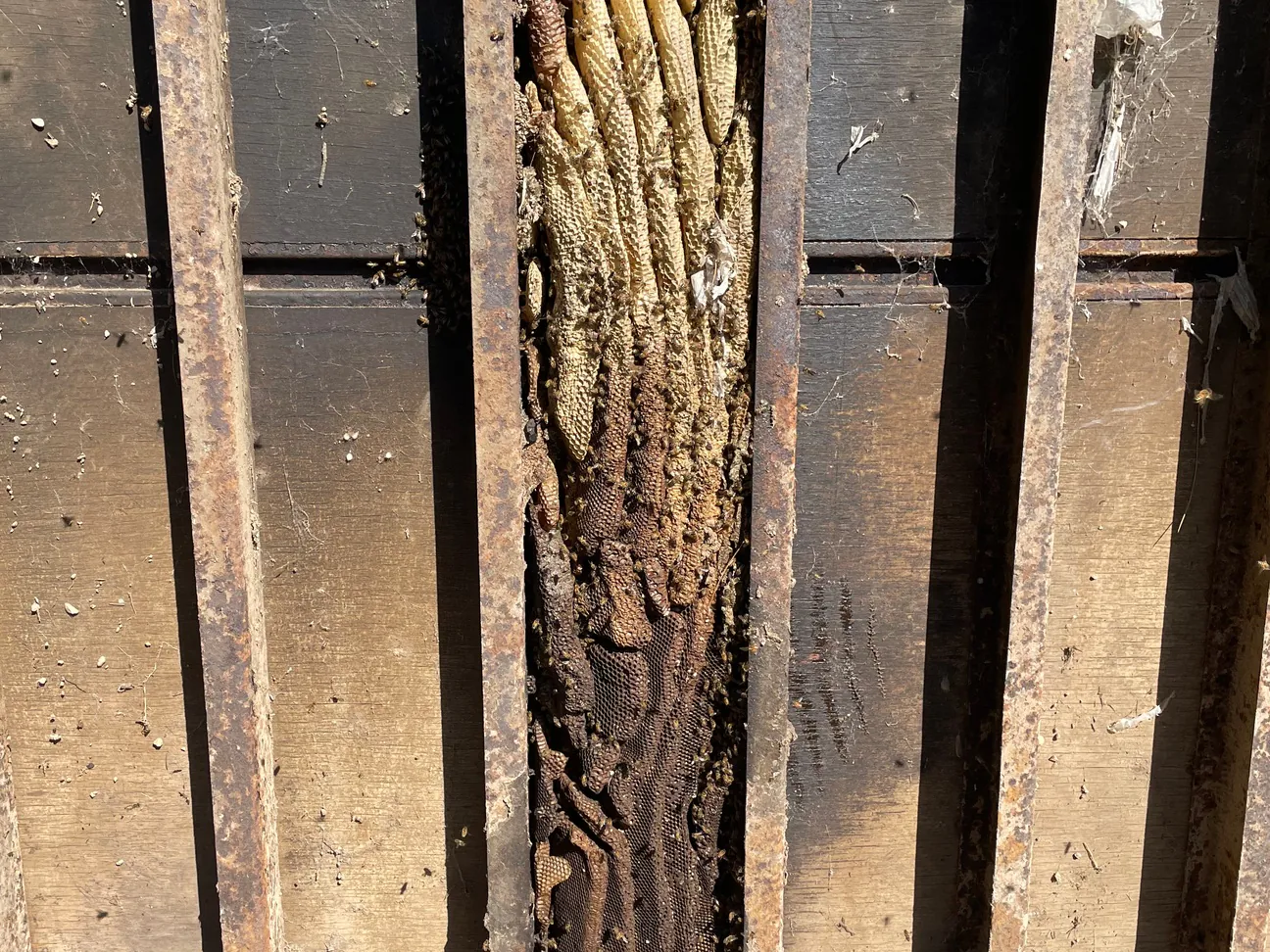
A can of spray or a tube of caulk looks like a quick fix. Either one leaves the comb and honey right where they are.
That honey is the real trouble. The University of California's pest management program, which publishes pest guidance for California homeowners, explains it this way: honey nobody is tending can soak up moisture and ferment, and the pressure can pop the wax caps on the cells. Then it runs down inside the wall until something stops it, like a window frame, a door frame or the floor, and seeps through.
Spraying the hole
- Dead bees and young bees can rot in the wall and smell
- Honey left behind can ferment and leak through drywall
- Sprayed honey, wax and dead bees have to be handled as hazardous waste
Sealing the hole
- Trapped bees hunt for another way out, sometimes into the house
- The comb and honey stay right where they were
- The smell of the wax keeps drawing bees to the spot
Can you get bees out of a wall yourself?
The same University of California guidance says not to try it without experience and the right gear. A colony that has comb and young bees to protect will defend them, and opening the wall is exactly the kind of disturbance that sets them off.
Here in Riverside County there's another reason to keep your distance. Bee researchers at UC Riverside say Africanized honey bees look nearly identical to European honey bees, and that in areas where they've settled in, like ours, any honey bees not kept by a beekeeper should be treated as Africanized.
A swarm resting in the open is often less defensive than a colony guarding its home, but keep your distance either way. Around here, even a swarm can be unpredictable.
Leave the colony alone until it's removed
Keep people and pets back from the entrance, and don't spray, pry or cut into the wall. If anyone has trouble breathing or swelling in the throat after a sting, call 911.
What a complete wall removal looks like
A colony that's been in a wall for a while can have a lot of comb, and a well-established colony may have up to 100 pounds of honey. Getting all of it out takes a few steps:
- Find exactly where the comb sits before anything is opened.
- Open the wall, soffit or ceiling right over the colony.
- Remove the bees, comb, honey and young bees.
- Clear out the cavity.
- Close the opening and seal the gaps the bees were using.
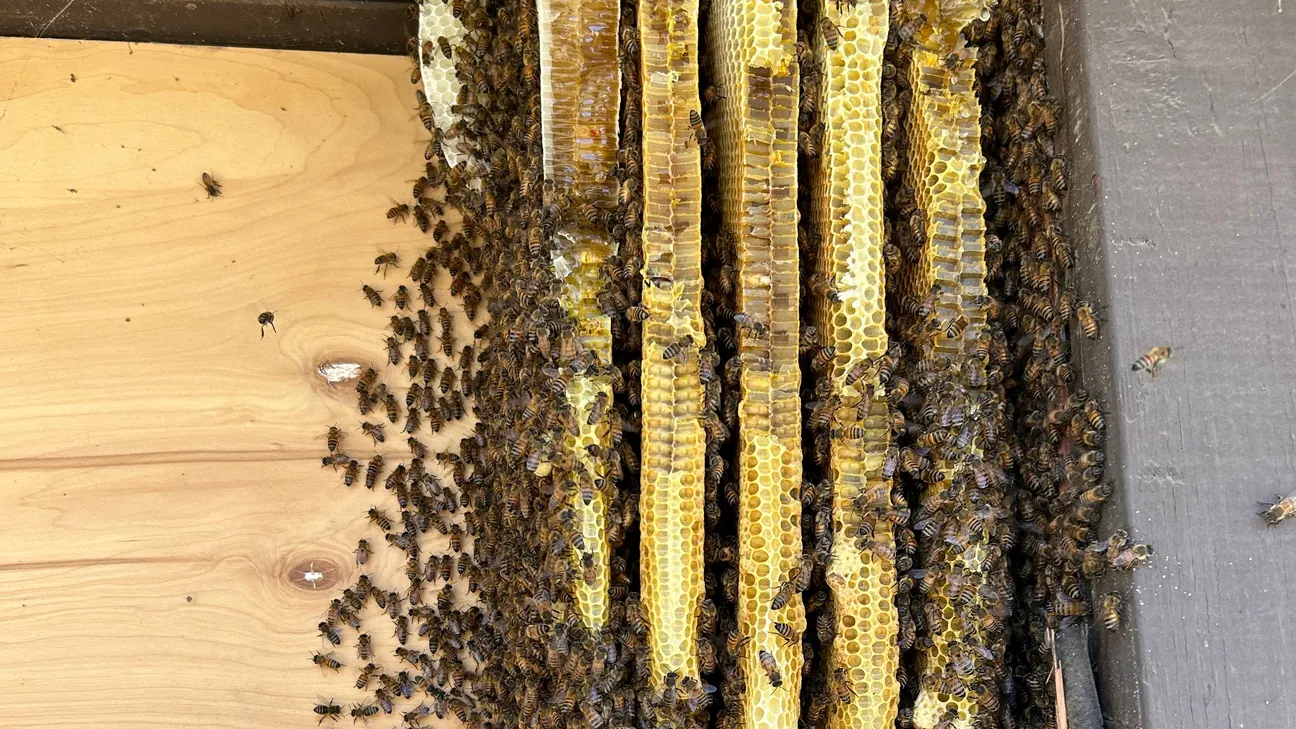
That's how our bees in walls work goes, and the bees come out alive whenever it's safe and practical.
Why the old entrance isn't the only gap to close
Honey bees have a very sharp sense of smell. Scouts looking for a home can pick up the scent of old wax from a long way off, even after the comb is gone.
That's why the University of California recommends closing any hole the size of a pencil or bigger that leads into a hollow space, and checking the whole side of the house around the old entrance. If the entrance was on a corner, check both sides. Bees that find a gap into the space next door will move right in.
Questions to ask before your wall is opened
Know exactly what's going to be done before anyone starts. Ask these before work begins:
- Will the bees be removed alive, or killed in place?
- Will the comb and honey come out, or stay in the wall?
- Which gaps will be sealed once the bees are out?
- Who closes the wall back up, and is finish work like paint or stucco part of the price?
Want a straight answer on your wall? Text or call us with a photo of where the bees go in and out, taken from a safe distance. Estimates are free, and same-day removal is often available.


