


 THE SHORT ANSWER
Why bees gather after a hive removal
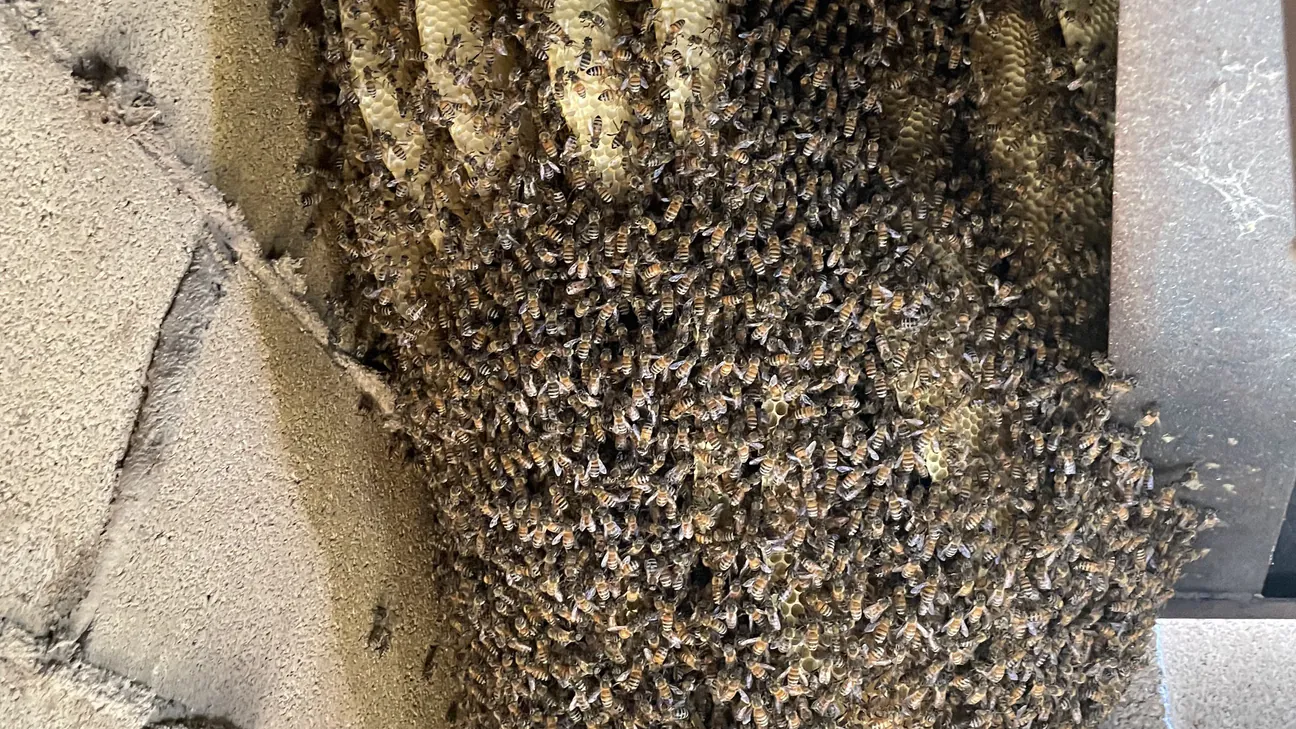
Seeing bees after a removal doesn't always mean they've moved back in. A cluster right after the job can be bees that were out when the hive was removed. Others may have slipped away during the work and gathered there.
Watch from a safe distance to see if bees are circling the old entrance or going in and out of a gap. If there's a cluster, watch for it getting bigger or staying put.
Before we leave a removal job, we explain what to watch for afterward.
Wax scent can linger after the comb is gone
Wax scent can stay behind even after the comb is gone. Scout bees looking for a new home can pick up that smell, so seeing them doesn't mean the removal was done badly.
During a beehive removal, we take the bees out alive with the comb we can reach. We clean up what came out and point out openings that need sealing. If the comb is inside a wall or roof, we need to get into that space to remove it.
The University of California's pest management program, which publishes pest guidance for California homeowners, says honey left in a wall can ferment and leak through the drywall. Young bees left in the comb without care can also rot and smell.
Look beyond the old entrance when bees return
Bees can use another opening after the old entrance is closed. To find other gaps, the University of California recommends checking the whole side of the building around the old entrance. If that entrance was at a corner, check both sides.
Note any new opening the bees are using so you can show us where it is.
Details to note when bees return
These details help us understand what you're seeing after the removal.
- When the hive was removed and who did the work.
- Where the bees are now compared with the old entrance.
- What you see, such as a few bees, a cluster, visible comb or traffic through a gap.
- When the activity started and if it stopped and started again.
- Any bees inside the house and any repairs done since the removal.
Keep people and pets away from the bees. Don't spray them or seal an opening they're using.
When bees keep coming back after removal
Daily bee traffic needs attention
Call us if bees keep going in and out of a gap day after day or a cluster grows or stays. We also need to hear about bees inside the house.
A passing swarm can still visit an old hive spot.
If someone has an allergic reaction to a sting, get medical help right away.


