


 THE SHORT ANSWER
Why a wall colony stays put in winter
Bees don't move out just because it gets cold. In cold weather honey bees pack together in a cluster to keep their young warm, and in a mild winter they can keep raising young.
That's why a quiet entrance on a cool morning doesn't tell you much. Bees fly when the weather lets them, and activity can pick back up when it warms.
A swarm hanging on a branch is a different situation. A swarm is looking for a home and may move on. Bees going in and out of a hole in your wall may have moved in, and that's worth a look.
Don't seal the hole while bees are using it
It's tempting to caulk the hole and call it done. Please don't. Sealing an active entrance traps the colony, and the bees go looking for another way out, sometimes into the house. The comb and honey stay right where they were.
If the hole is already covered, tell us what was used and where. Leave it as it is until we take a look, especially if bees have started showing up inside.
What to tell us when you call
When you call, these details help, and all of them are things you can see or hear from a safe spot:
- Where the bees go in and out, and how high up it is.
- When you first noticed them, and whether it's gotten busier.
- Any bees inside the house.
- Buzzing behind a wall or ceiling.
- Stains, soft spots or anything that looks like it's leaking.
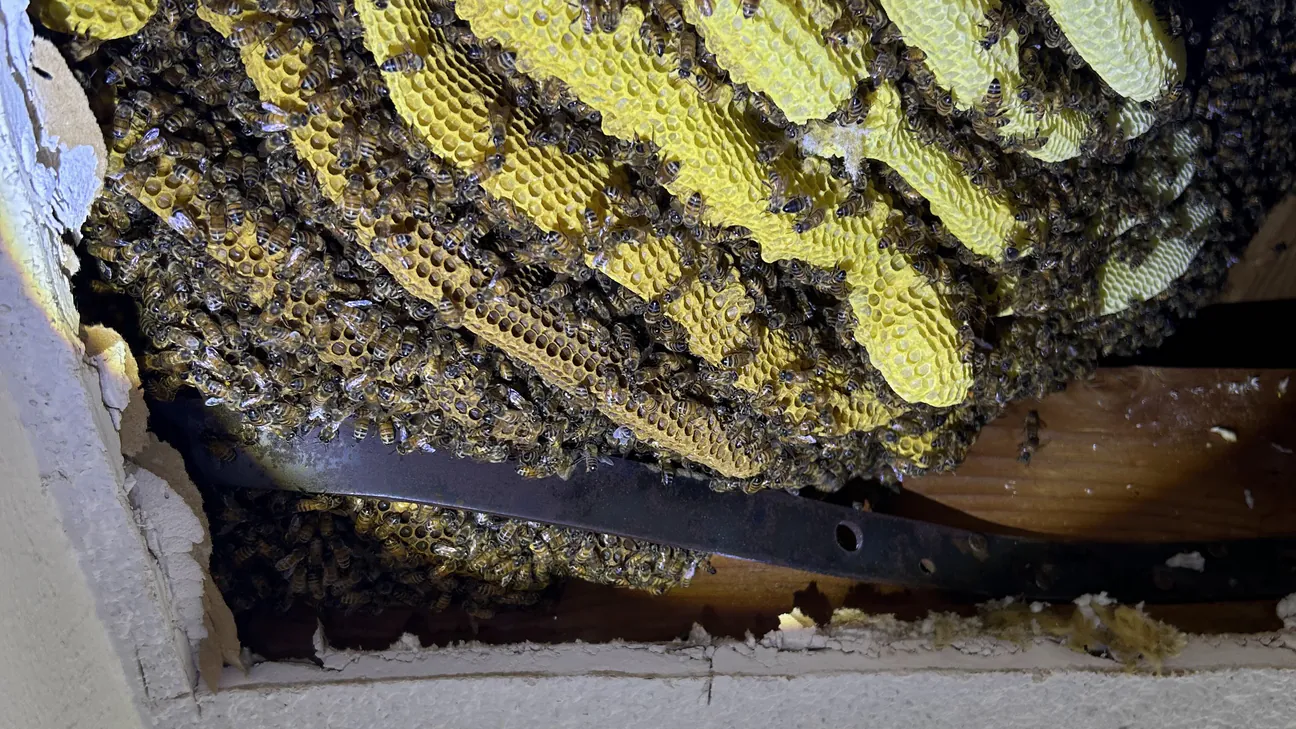
If you see a stain, mention it along with what the bees are doing. The University of California's pest management program, which publishes pest guidance for California homeowners, describes honey left inside a building leaking through the walls. Until we get there, keep kids and pets back, don't spray or bang on the wall, and stay off ladders.
How we get bees out of a wall
Our bees in walls work starts with finding exactly where the colony sits before anything is opened. We tell you what needs to be opened before we start. No two walls open up the same way.
We remove the bees alive and relocate them whenever it's safe and practical. Then the comb, honey and young bees come out of the cavity. Once the space is cleared, the entrance gets sealed. Removal first, sealing second.
Before we start, ask us which surface we'll open, how it will be closed, and whether any finish work is separate. You should know exactly what the job includes.
When to call instead of waiting for spring
Bees inside or next to a door: call now
If bees are getting into a room, honey is leaking, or the entrance is right by a door or window people use, don't wait on the weather. Same-day help is often available.
If someone with a bee or wasp sting allergy is stung, or anyone gets a lot of stings, get medical help first. Then we'll deal with the wall.


