

 THE SHORT ANSWER
Start with where the nest is
Start by noting where the nest is. A paper nest under a back eave that nobody walks past is a very different problem from yellow jackets flying in and out of a hole next to your front step.
One thing that throws people off: wasps at the picnic table don't tell you where the nest is. Foraging yellow jackets can come from a nest somewhere else entirely.
A quick word on how we work. Honey bees we remove alive and relocate whenever it's safe and practical. Wasps and yellow jackets are different: we treat and remove those nests instead of relocating them. So the first step is knowing which insect you have, and a photo taken from a safe distance helps us tell you.
Honey bee, paper wasp or yellow jacket?
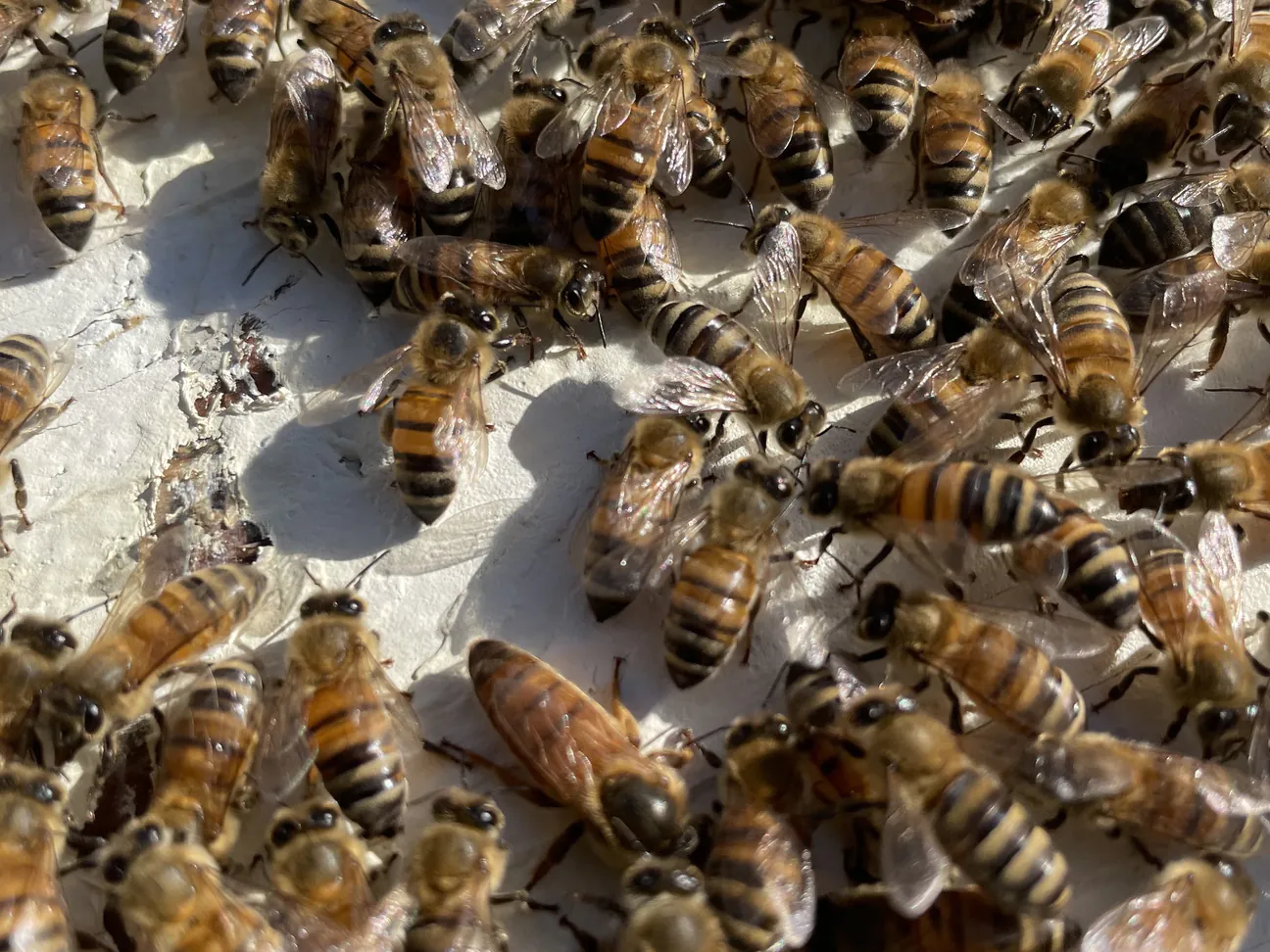
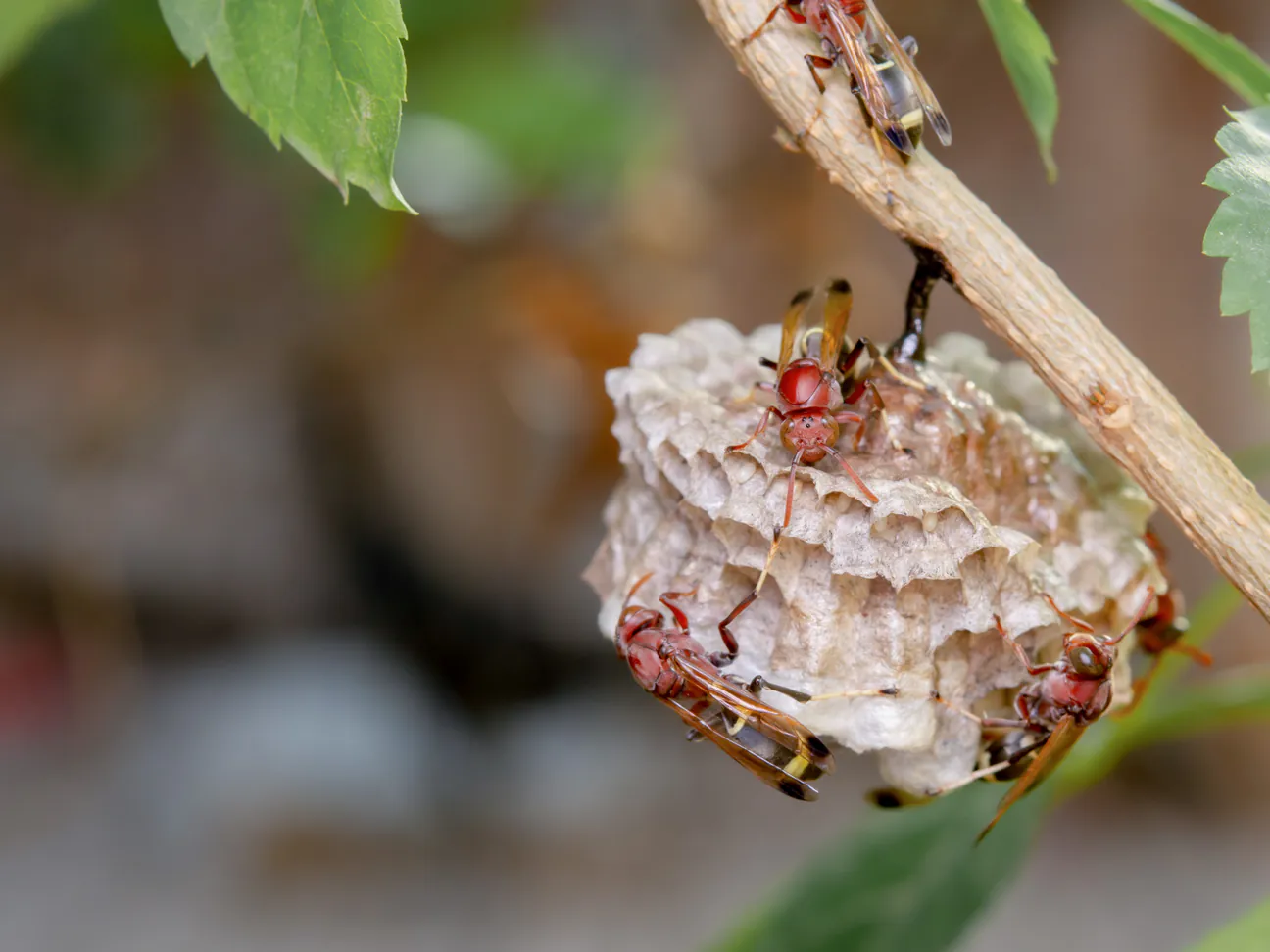
Keep your distance while you look. Honey bees look fuzzy and less brightly striped. Yellow jackets are smooth and bright yellow and black. Paper wasps are slimmer and build open, umbrella-shaped paper nests under eaves and overhangs. Yellow jackets often nest out of sight, in the ground or inside a wall or other hollow space.
Honey bees
- Fuzzy bodies with softer striping
- Build wax comb
- Swarms rest in a cluster while they look for a home
Paper wasps and yellow jackets
- Smooth bodies with bright markings
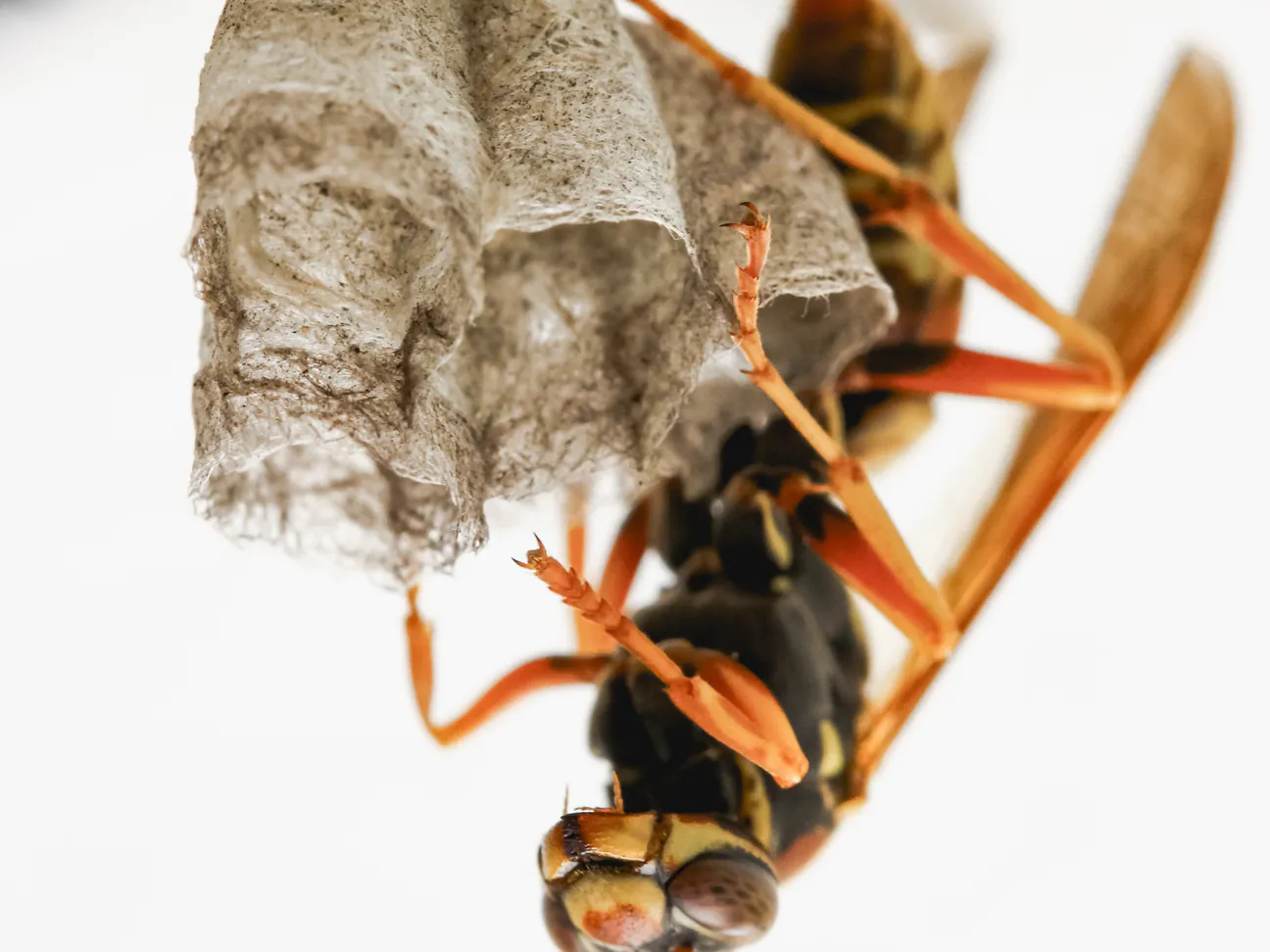
- Build nests out of a papery material
- Defend a disturbed nest
When you can leave a wasp nest alone
Not every nest has to go. UC's pest guidance says paper wasp nests generally don't need treatment unless they're near people, and paper wasps eat other insects, including ones that feed on plants.
So the real question is how people use the space. A nest in a far corner of the yard can often stay put. A nest by the door, the pool gate or where the kids play is a different story. Make that call from where you can already see it. There's no reason to walk up for a closer look.
Cut off what brings yellow jackets to the table
In late summer and fall, yellow jackets go after food. Taking away what they're after can cut down the visits:
- Keep food and drinks covered when you eat outside.
- Use cups with lids. Yellow jackets crawl into open cans and can sting someone drinking from one.
- Bring pet food inside.
- Keep garbage and recycling bins closed tight.
- Pick up fallen and overripe fruit.
That helps with the visitors, but it doesn't remove the nest. Store-bought lure traps can catch some foragers too, but UC notes they won't get rid of a large colony. If you use one, keep it well away from where people sit.
What happens when we remove a nest
With our wasp and yellow jacket removal, we treat the nest and take it down, and people and pets stay clear while we work. A nest in the ground needs a different setup than one hanging under an eave, which is why we ask where it is.
Please don't go after it yourself with a spray can at night. UC warns that wasps will defend a nest during treatment, and the dark doesn't change that.
When to call us
Call when the nest is where people have to be
A nest beside a door, on a walkway, near a play area or anywhere people can't avoid is worth a call now. So is any nest that has already caused stings.
If someone with a bee or wasp sting allergy is stung, or anyone gets stung many times, get medical help first. Trouble breathing, swelling in the throat or feeling faint is an emergency. The nest can wait.
- Keep people and pets away, and take another route if the path runs past the nest.
- Don't spray, swat, dig, block the hole or knock the nest down.
- Not sure it's wasps? Don't spray. It may be honey bees, and those we remove alive.
- From a safe spot, notice where they go in and out so you can tell us when you call.


